





Ramnaam Book
Introduction
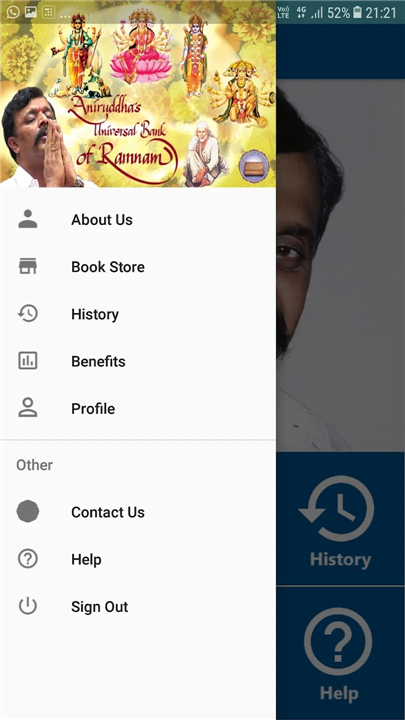
• The Ramnaam Book App is the official digital platform of Aniruddha’s Universal Bank of Ramnaam, a spiritual initiative founded in 2005 by Dr. Aniruddha D. Joshi, also revered as Sadguru Shree Aniruddha.
• This unique “bank” does not accept conventional currency; instead, it receives deposits in the form of the written name of God — Ramnaam — compiled in special Ramnaam books.
• The app allows devotees to participate in this sacred activity digitally, while maintaining the sanctity and structure of the physical practice.
Structure of the Ramnaam Book
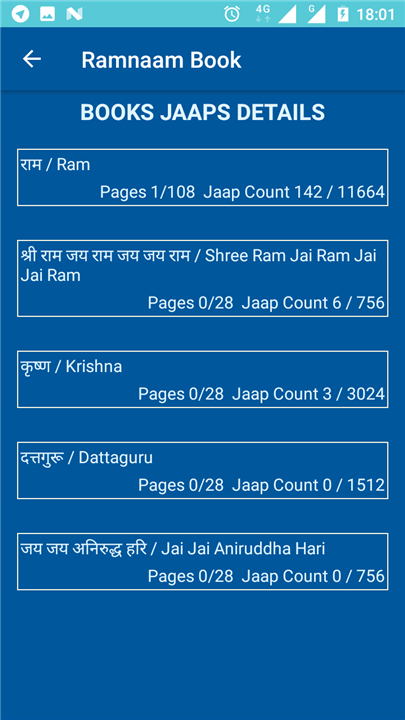
• The book comprises 220 pages in total.
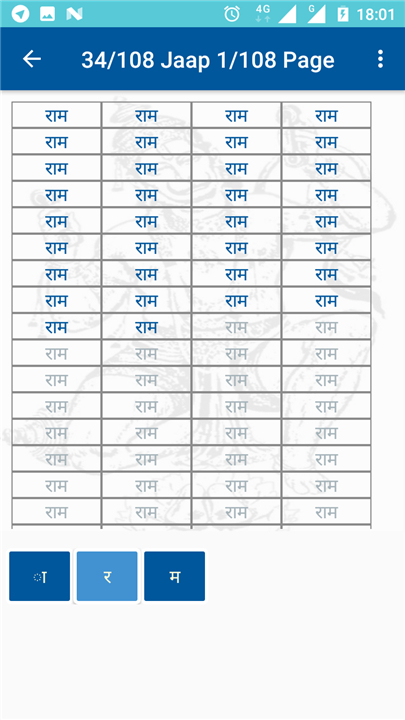
• The first 108 pages are dedicated to writing the single word “Ram.”
• The next 28 pages are for the mantra “Shree Ram Jai Ram Jai Jai Ram.”
• Following this, 28 pages are for writing “Krishna.”
• Another 28 pages are for “Dattaguru.”
• The final 28 pages are for “Jai Jai Aniruddha Hari.”
• Each page carries a watermark of Shree Hanuman, intended as a spiritual backdrop for the written Ramnaam.
Spiritual Significance and Origins
• The tradition draws inspiration from the time of Lord Ram’s victory over Lanka.
• When the Vanar Sena (army of Shree Ram) was building the Samudrasethu bridge from Rameshwar to Lanka, Hanumanji recognized the immense challenge.
• He began inscribing “Ram” on every boulder used, which made them float on water by divine grace.
• It is believed that writing Ramnaam on the Akrutibandh (figure) of Hanuman multiplies the spiritual merit — one written Ramnaam counts as a thousand.
Features of the App
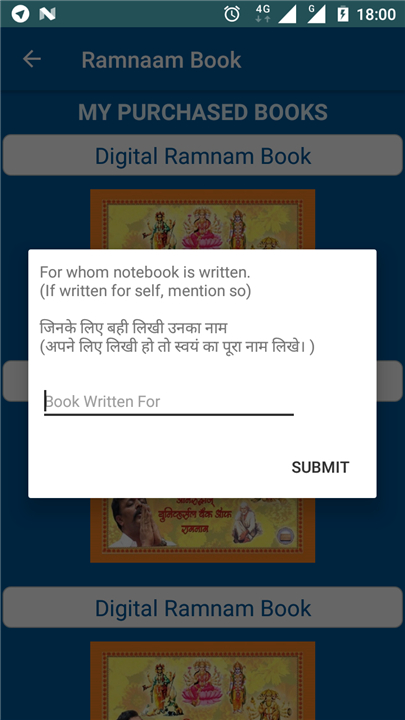
• Purchase and download a digital Ramnaam book.
• Complete the writing of all prescribed mantras within the book’s format.
• Submit the completed book through the app to deposit it into your spiritual account at Aniruddha’s Universal Bank of Ramnaam.
• Keep track of your accumulated “deposits” in this divine currency, fostering discipline and devotion in daily practice.
FAQ
Q: Why are there exactly 220 pages in the Ramnaam Book, and how are they organized?
A: The 220 pages mirror the structure of the original physical Ramnaam book. The first 108 pages are dedicated solely to the simple mantra “Ram.” Pages 109 through 136 carry the longer mantra “Shree Ram Jai Ram Jai Jai Ram.” The following 28 pages (137–164) are reserved for “Krishna,” then pages 165–192 for “Dattaguru,” and finally pages 193–220 for “Jai Jai Aniruddha Hari.” This precise arrangement maintains the traditional sequence and spiritual progression.
Q: What is the spiritual significance of writing Ramnaam with a watermark of Shree Hanuman on each page?
A: According to tradition, Hanumanji—who inscribed “Ram” on the floating boulders during the construction of the Samudrasethu bridge—multiplied the efficacy of each inscription a thousandfold. The watermark of Shree Hanuman on every page symbolically evokes his blessing and strength, amplifying the merit of each written name and deepening the devotee’s connection to divine grace.
Q: Can you explain the origin story behind the practice of inscribing Ramnaam on stones?
A: The practice dates back to Lord Ram’s victory over Lanka. When the Vanar Sena needed to build a bridge across the ocean, Hanuman understood that mere stones wouldn’t float. He began writing “Ram” on each boulder, and by divine grace they rose onto the water. This legend teaches us that divine remembrance imbues the inanimate with transcendental power.
Version History
v11.1——19 Jan 2026
This is the official app of 'Aniruddha's Universal Bank of Ramnaam' Download the latest version of Ramnaam Book to enjoy new features and updates immediately!
*11.1
Minor bug fixes
*10.9
Minor bug fixes
*10.5
Minor bug fixes









Ratings and reviews
There are no reviews yet. Be the first one to write one.